

Published: January 26, 2026
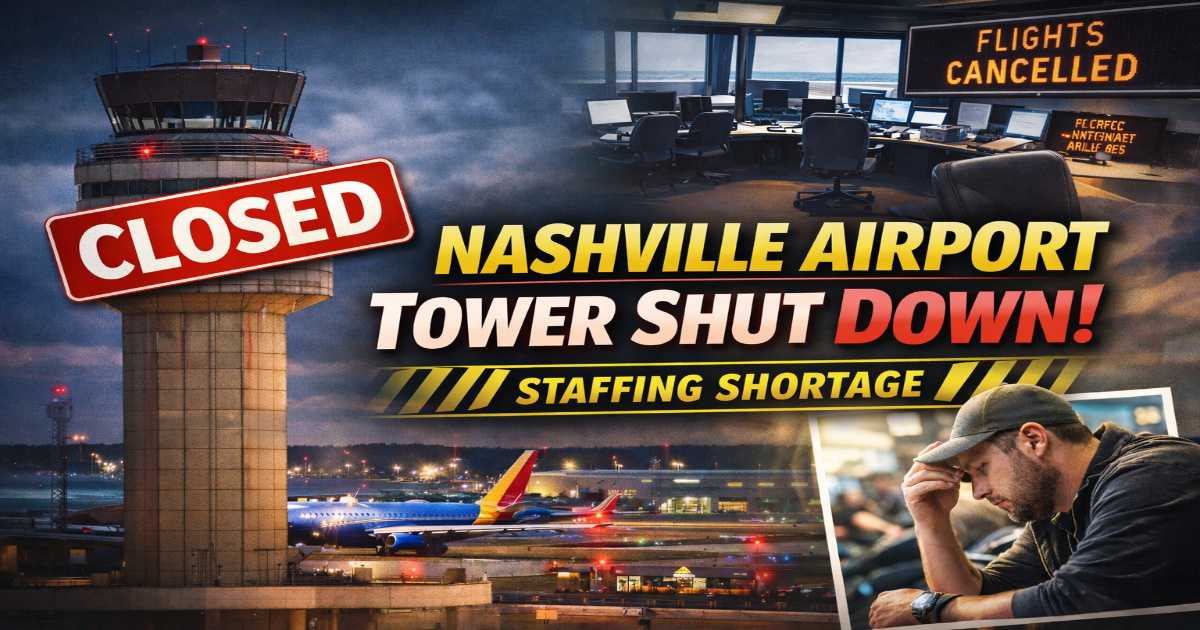
Nashville International Airport (BNA), one of the fastest-growing airports in the United States, faced a temporary but serious disruption when its Air Traffic Control (ATC) tower was shut down due to a staffing shortage. The incident raised concerns among passengers, airlines, and aviation experts, highlighting a growing problem within the U.S. aviation system.
In this blog post, we will explain what happened, why it happened, how it affected flights, and what this situation means for the future of air travel.
What Happened at Nashville International Airport?
In the early hours of January 26, 2026, the Federal Aviation Administration (FAA) temporarily shut down the air traffic control tower at Nashville International Airport. The shutdown occurred because there were not enough certified air traffic controllers available to safely operate the tower.
During this period, the airport entered a status known as “ATC Zero”, which means:
- No air traffic controllers were available
- No aircraft could take off or land
- Normal airport operations were suspended
Although the closure lasted only a few hours, its impact was felt throughout the day.
Why Was the ATC Tower Shut Down?
The primary reason behind the shutdown was a staffing shortage of air traffic controllers. According to aviation officials, the tower did not have the minimum number of controllers required to maintain safe operations.
Key Reasons Behind the Shortage
- Nationwide ATC staffing crisis: Many FAA facilities across the U.S. are operating below recommended staffing levels.
- High workload and fatigue: Air traffic controllers work under intense pressure, leading to burnout.
- Training and certification delays: Becoming a certified ATC controller takes several years.
- Unexpected absences: Illness, leave, or weather-related issues can quickly reduce available staff.
This combination of factors made it impossible to keep the Nashville tower operational at that time.
Impact on Flights and Passengers
The temporary shutdown caused delays and cancellations for both arrivals and departures at Nashville International Airport.
Passenger Impact
- Early-morning flights were delayed or canceled
- Some incoming flights were diverted to other airports
- Airlines advised passengers to check flight status before heading to the airport
Although operations resumed later in the morning, schedule disruptions continued for several hours as airlines worked to recover.
Tower Reopened and Operations Restored
The FAA confirmed that the air traffic control tower reopened later the same day once enough controllers became available. After reopening:
- Takeoffs and landings resumed
- Airlines began rebooking affected passengers
- Airport operations gradually returned to normal
No safety incidents were reported during or after the shutdown.
Why This Incident Matters
This was not just a local issue—it reflects a larger systemic challenge facing the U.S. aviation industry.
Bigger Picture
- The FAA has acknowledged a shortage of thousands of air traffic controllers nationwide
- Air travel demand is increasing faster than staffing levels
- Staffing shortages can lead to delays, reduced capacity, and temporary closures
If not addressed, similar disruptions could occur at other major airports.
What the FAA Is Doing About It
The FAA has stated that it is actively working to address the staffing crisis by:
- Hiring more air traffic controllers
- Increasing training capacity
- Offering incentives to retain experienced staff
- Improving workforce scheduling
However, experts say long-term solutions will take time to fully implement.
Conclusion
The temporary shutdown of the Nashville Air Traffic Control Tower due to staffing shortages serves as a wake-up call for the aviation industry. While the situation was resolved quickly, it exposed vulnerabilities in the current air traffic control system.
For passengers, the key takeaway is to stay informed, check flight status regularly, and plan for possible delays, especially during peak travel seasons.
As air travel continues to grow, addressing staffing challenges will be crucial to ensuring safe, efficient, and reliable flight operations in the future.
Disclaimer
This article is for informational purposes only. Flight operations, schedules, and airport conditions may change at any time. Passengers should always verify the latest updates directly with airlines or official airport authorities before traveling.