
Introduction
Microsoft (NASDAQ: MSFT) recently reported quarterly earnings that surpassed expectations, prompting questions regarding the subsequent decline in its stock price. Typically, a company that exceeds earnings estimates experiences a positive market reaction; however, this time, investors were taken aback by the unexpected downturn. Several factors may have contributed to this anomaly, including broader market trends, investor sentiment, or concerns about future guidance, suggesting that the market’s response was influenced by elements beyond the immediate financial performance of Microsoft.
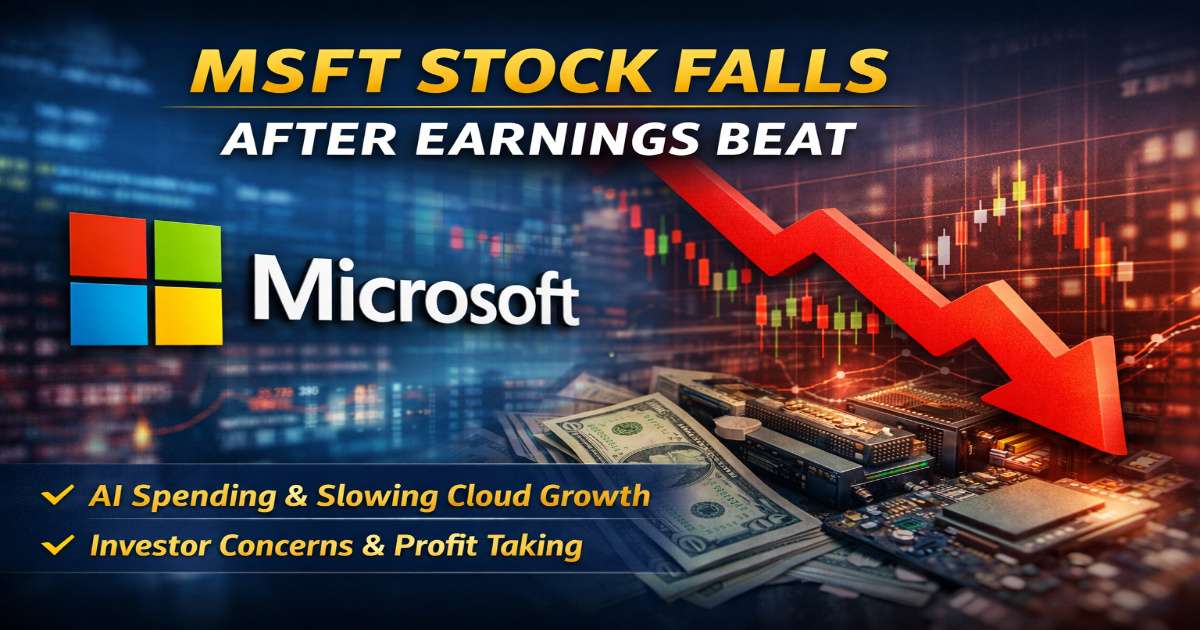
Microsoft (NASDAQ: MSFT) recently reported better-than-expected quarterly earnings, yet its stock price moved in the opposite direction. For many investors, this reaction came as a surprise. After all, when a company beats earnings estimates, the market usually rewards it. So why did MSFT stock fall despite strong financial results?
The answer lies beyond just headline numbers. While Microsoft delivered solid revenue and profit growth, investors focused more on future challenges, including rising AI investments, cloud growth expectations, and cautious guidance. In today’s market, it’s not only about how a company performed in the past quarter — it’s about what lies ahead.
Microsoft Q2 Earnings Snapshot: The Good News
Microsoft reported better-than-expected quarterly results, beating Wall Street estimates on both revenue and profit.
Key Highlights:
- Revenue and EPS beat expectations
- Strong performance from Cloud and AI-related businesses
- Azure cloud revenue continued to grow
- Demand for AI tools and enterprise software remained healthy
On the surface, these numbers clearly showed that Microsoft’s core business is still very strong.
So why did MSFT stock fall?
Why MSFT Stock Fell Despite Strong Earnings
1. Rising AI & Cloud Spending Worried Investors
One of the biggest concerns was rapidly increasing capital expenditure (CapEx).
Microsoft is investing aggressively in:
- AI infrastructure
- Data centers
- Advanced chips
- Cloud expansion
While this is good for long-term growth, it puts pressure on short-term profits and margins. Investors are now asking:
“When will these massive AI investments start delivering strong returns?”
2. Azure Cloud Growth Showed Signs of Slowing
Azure is Microsoft’s most closely watched growth engine.
- Growth was still strong
- But slightly slower than previous quarters
Even a small slowdown in cloud growth can make investors nervous, especially when the stock is already trading at premium valuations.
3. Guidance Was Cautious, Not Explosive
Although Microsoft beat earnings, future guidance did not excite the market.
Management signaled:
- Continued high spending
- Moderation in growth rates
- Focus on long-term AI strategy rather than short-term profits
Markets often react more to future expectations than past performance.
4. “Sell the News” Market Behavior
MSFT stock had already rallied significantly before earnings.
When results are:
- “Good but not extraordinary”
- Already priced in
Traders often book profits. This is a classic “sell the news” reaction, not necessarily a sign of business weakness.
Is Microsoft’s Business Still Strong?
Yes — fundamentally, Microsoft remains one of the strongest tech companies in the world.
Strengths Include:
- Dominant position in enterprise software
- Strong cloud ecosystem
- Early leadership in AI integration
- Recurring revenue from Office, Azure, and LinkedIn
- Deep partnership in AI technologies
The current stock dip is more about valuation, spending, and expectations, not business failure.
What This Means for Long-Term Investors
For long-term investors, this earnings reaction can be seen in two ways:
Short-Term View:
- Volatility may continue
- Stock may consolidate or correct further
Long-Term View:
- AI investments could drive massive growth
- Microsoft is building infrastructure for the next decade
- Temporary margin pressure may be acceptable for future dominance
Many long-term investors actually watch such dips as potential accumulation opportunities.
Should You Be Worried About MSFT Stock?
If you are:
- A short-term trader → volatility matters
- A long-term investor → fundamentals still look solid
The key thing to track going forward:
- Azure growth trend
- AI monetization progress
- Margin recovery timeline
Final Thoughts
Microsoft beating earnings but seeing its stock fall might look confusing at first — but the market is reacting to future costs and growth expectations, not past numbers.
👉 Strong earnings don’t always guarantee stock gains
👉 Investor sentiment often focuses on what’s next
Microsoft is betting big on AI, and while the payoff may take time, the company remains a core leader in global technology.
Disclaimer
This article is for informational purposes only and should not be considered financial advice. Always do your own research or consult a financial advisor before making investment decisions.